
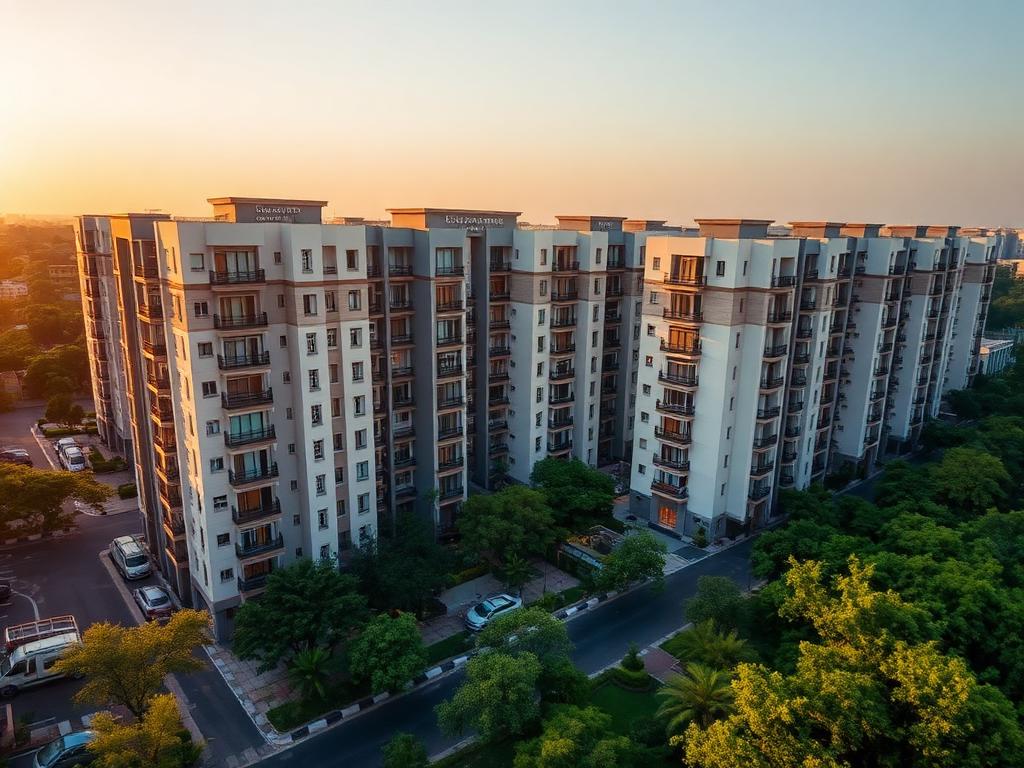
Residential
Scenario
01
Residential JV scenario
Chennai · 8,400 sq ft plot
Modelled outcome: built-area share plus a cash component, subject to sanctioned FSI.
Understand what your land can support, compare development options and evaluate suitable builder partnerships before making a commitment. Chennai first, across Tamil Nadu next.

Planning parameters, access, site constraints and ownership position — read together, before anyone talks about a deal.
Sale, joint venture, development management or a lease-based use — compared on risk, control and timeline, not on headline value alone.
Developers assessed on relevant track record, financial capacity, delivery history and fit with this specific project.
Commercial terms, documentation coordination with your own advisors, and milestone tracking through construction and handover.
Choose the category that matches your plot to see the development routes it can realistically support — with FSI, market rates and demand signals for Chennai, and rolling out across Tamil Nadu.
A sale price answers one question, once. Development potential answers a different one: what this parcel can physically carry, what the market will absorb, what it costs to build, and which structure leaves you in the strongest position. The sequence below is the order in which those questions should be answered.
Extent, frontage, access, ownership and encumbrance position.
Zoning, planning parameters and what the site can physically carry.
Indicative buildable and saleable area under applicable rules.
Revenue assumptions less construction, approval, finance and selling costs.
Sale, JV, development management, lease or a combination.
Developer shortlisting against a written evaluation framework.
Commercial terms, security mechanisms and documentation, reviewed by your advisors.
Construction, milestone monitoring and handover of the landowner's share.
The right pathway depends on the parcel, the planning position, your liquidity needs and how much involvement you want. We will not recommend a model before there is enough information to support it.
| Development route | When it may make sense | Complexity | Landowner involvement |
|---|---|---|---|
| Outright sale | Immediate liquidity matters more than participating in the upside. | Low | Low |
| Joint venture | You want a share of the developed project rather than a one-time price. | High | Medium to high |
| Development management | You want to retain greater control and appoint contractors yourself. | High | High |
| Residential development | Location and planning parameters support residential demand. | Medium to high | Medium |
| Commercial development | The site is strategically located for office, retail or mixed occupiers. | High | Medium |
| Warehouse / logistics | Access, road width and corridor position suit industrial or logistics use. | Medium | Medium |
| Mixed use | Scale and frontage support more than one use on the same parcel. | High | High |
| Renewable / other lease | Site characteristics suit a long-term lease rather than a build. | Variable | Variable |
There is no universal right answer. The route that suits your land depends on how much cash you need now, how much risk you are willing to carry, and how long you can wait. Use this table to see where each option is genuinely stronger.
| Factor | Sell | Joint venture | Self-develop |
|---|---|---|---|
| Immediate liquidity | Full value at registration | Partial — refundable deposit or cash component, if agreed | None; cash flows out first |
| Capital requirement | None | None from the landowner in a standard JV | Full construction and approval cost |
| Development exposure | None once sold | Shared — the developer builds, you retain the land interest | Entirely yours |
| Potential upside | Capped at the sale price | Share of the developed value, subject to market | Highest in theory, if delivery goes to plan |
| Involvement | One transaction | Periodic review and approvals at agreed milestones | Continuous, effectively a full-time role |
| Timeline | Weeks to a few months | Typically multi-year, from sanction to completion | Multi-year, plus sales period |
| Risk | Price and title risk only | Counterparty, approval and market risk | Cost, approval, delivery and market risk |
A joint venture is a sequence, not a signature. Nothing binds you until the agreement stage, and you can stop after any step.
Establish what the plot can support under the applicable planning norms.
Check title, encumbrance, patta, land use and any litigation on record.
Build the development economics with every assumption written down.
Set the joint venture against sale and self-development on the same numbers.
Approach development partners whose delivery record fits this kind of project.
Work the share, cash component, timelines and default remedies.
Register the joint venture agreement and a limited, build-specific power of attorney.
Track sanction, construction milestones and handover against the agreement.
Enter your plot details and see indicative buildable area, a defensible landowner share range and land value for your city. Estimates only — final terms follow site inspection, title diligence and planning sanction.
A landowner share is an output of project economics, not a market convention. Change the buildable area, the achievable price or the cost stack, and the defensible share moves with it.
Prices and absorption can move between launch and completion. Revenue assumptions are estimates, not commitments.
Planning permission, premiums and conditions are decided by the authority, on its own timeline.
Cost escalation, contractor performance and quality variance affect both cost and delivery date.
The developer's access to funding, and its cost, can change the viability of an agreed structure.
A development partner can underperform or default. Security mechanisms exist for this reason.
Multi-year programmes slip. Delay provisions matter as much as the headline share.
Title, development rights, power of attorney scope and exit terms determine your real exposure.
Preliminary assessments are based on the information available at the time and are not a substitute for legal, planning, valuation, tax, engineering or financial advice. Every transaction is different; final terms should be reviewed by qualified professionals before execution.
We publish the framework rather than a wall of logos. A developer appears on a shortlist because of how they score against this specific project — and we tell you which checks are complete and which are not.
Completed projects of comparable type and scale — not total portfolio size.
Audited financials, leverage position and ability to fund this project's cash curve.
In-house team or contractor relationships, and recent build quality.
Demonstrated delivery in this corridor, with the local approval experience it implies.
Experience with the specific product this land supports.
Committed versus actual completion dates on prior projects.
Buyer feedback, consumer forum history and public disputes.
Project-level RERA registration and filing discipline on live projects.
Does this parcel matter to them, or is it a marginal addition to a pipeline?
Willingness to accept the security and reporting terms you need.
Behind every proposal is a stack of models, escrow rails, and analytics — engineered so the numbers you see are the numbers you sign.
City-level planning and market assumptions create an indicative starting point. Plot-specific facts still require verification.
Compare timeline, cost and share assumptions side by side, including downside cases before negotiation.
Where applicable and written into the project documents, review RERA registration, account controls and milestone protections.
A shortlist should state which financial, legal, reference and delivery-history checks are complete, dated and sourced.
A preliminary assessment carries no fee and no obligation. It tells you what your land could support, which development routes are worth exploring, and what would need to be verified before anyone commits.
Modelled scenarios that show how plot size, location and development route change the shape of a deal. They are hypothetical worked examples, not completed transactions, testimonials or evidence of our track record. Any share range is indicative. It depends on sanctionable development area, current comparable evidence, construction and professional costs, finance, specification, timeline, market absorption and project risk.
Modelled outcome: built-area share plus a cash component, subject to sanctioned FSI.

Modelled outcome: retained floors let on long lease rather than sold.
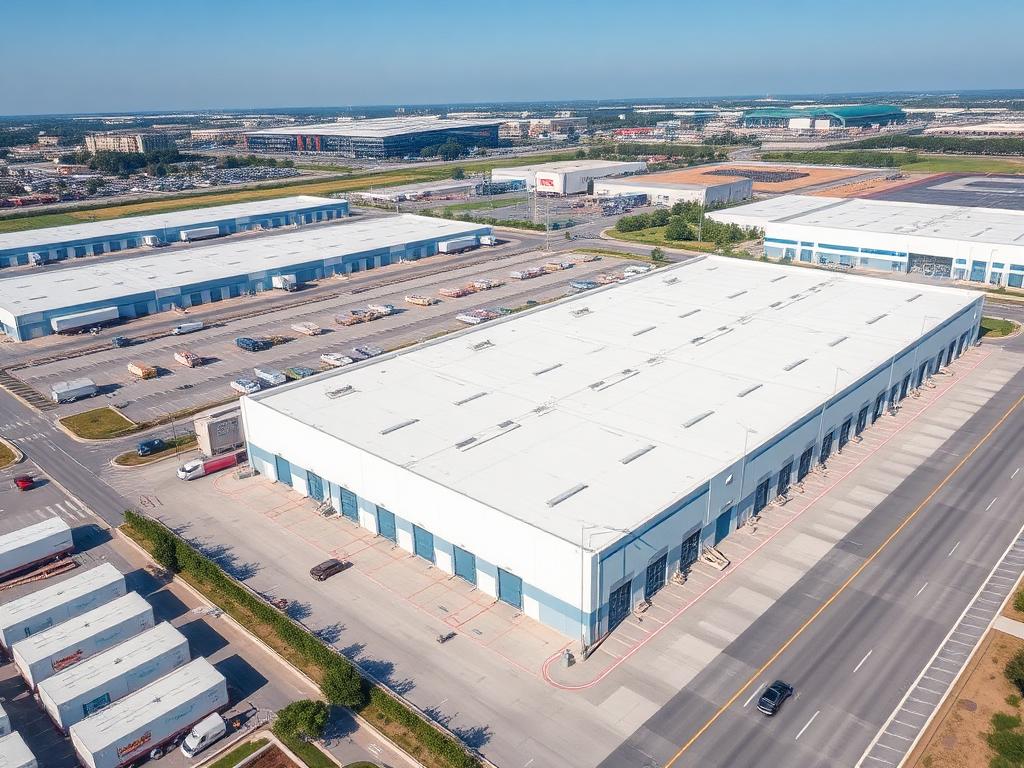
Modelled outcome: fixed annual rent with periodic escalation, no construction exposure.

Modelled outcome: per-acre annual rent over a long tenure, land retained throughout.
This is not legal advice, and it does not replace your own advocate. It is the list of places where landowners most often end up exposed — worth reading before any document is executed.
Is the chain of title complete, and who holds the originals?
What does a current encumbrance certificate show, and is anything undisclosed?
Are all co-owners and legal heirs identified, competent and in agreement?
Exactly what rights are being granted, over what extent, and for how long?
Is it limited in scope, revocable, and does it exclude sale of your retained share?
Do the recitals and the schedules actually match what was discussed?
Is your share defined in measurable area and identified units, not a percentage alone?
What secures your share if the developer stops — mortgage, lien, retained units, bank guarantee?
Can the developer mortgage the land, and is your share ring-fenced from that charge?
Who applies, who pays premiums, and what happens if sanction is refused or reduced?
Are milestones dated, measurable and tied to consequences?
What compensation applies for delay, and from which date does it run?
What counts as default, what is the cure period, and what reverts to you?
Can you exit, assign or sell your entitlement — and on what terms?
Arbitration or court, seat, language, and who bears costs?
What defines completion, and what defect liability survives handover?
In simple terms, the joint venture meaning in property is a written arrangement where a landowner contributes land and a builder contributes capital, approvals and construction expertise — and both share the finished project. A joint venture (often abbreviated JV) is not a sale, not a lease, and not a company merger. It is a project-specific partnership recorded through a registered joint venture agreement at the sub-registrar office, with clearly defined share ratios, delivery milestones and exit conditions.
Common joint venture examples in Chennai include a landowner offering a 4,800 sq ft plot in Teynampet modelled at six flats and ₹28 lakh cash, or a 3-acre parcel in Sriperumbudur modelled as a revenue-share warehouse. These are illustrative examples, not real projects or developer offers. Title, development rights, account controls and registration obligations depend on the executed documents and applicable law.
From initial information to documented responsibilities, with uncertainty stated at every stage.
Submit your plot location, survey details and size for an initial desk review. Any title, FSI or zoning conclusion remains subject to verification.
Where appropriate, a site visit checks boundaries, access and the likely planning jurisdiction before a formal scope is agreed.
A proposed agreement should state the area or revenue basis, allocation, specifications, timeline, responsibilities, remedies and project-level safeguards.
The joint venture agreement is registered at the sub-registrar. Development rights transfer to the builder; land title stays in your name.
Monitor the evidence required by the signed agreement. Any completed allocation, registration, rental or sale outcome depends on the final documents and project delivery.
Choosing the right JV partner decides whether your land becomes a legacy or a liability. Here is what landowners should test before committing — and what must be defined in writing.
Registration depends on project type, size, location, exemptions, jurisdiction and structure. Verify the specific promoter and project on the official portal.
Who funds construction, approvals, marketing, taxes and professional advice must be itemised in the proposed structure and engagement terms.
Any share range is indicative. It depends on sanctionable development area, current comparable evidence, construction and professional costs, finance, specification, timeline, market absorption and project risk.
Track-record figures are currently being verified and will be published with methodology and supporting documentation. We do not display counts we cannot evidence.
The required title, planning, insurance and regulatory documents vary by project. Missing or pending items should be stated explicitly.
A profile should state the checks completed, source and review date. Data currently unavailable is not treated as verified.
Whether you engage us or another builder, verify these ten points before you initial a single page of the JV. They are the difference between a fair partnership and a lopsided one.
Landowners often ask us whether a joint venture agreement is the same as a partnership deed. It is not. A JV is project-specific and self-liquidating; a partnership is an ongoing business relationship governed by the Indian Partnership Act, 1932. Here is a side-by-side view.
| Attribute | Joint Venture (JV) | Partnership |
|---|---|---|
| Purpose | Single, defined project (one building, one land parcel) | Ongoing business across multiple projects |
| Legal statute | Contract Act, 1872 + RERA, 2016 | Indian Partnership Act, 1932 or LLP Act, 2008 |
| Duration | Ends when project completes and units are registered | Continues until formally dissolved |
| Liability | Limited to the specific project and stated obligations | Unlimited, joint and several for all partners |
| Profit sharing | As per JV agreement — area share or revenue share | As per partnership deed — profit/loss ratio |
| Tax treatment | Each party taxed separately on their share | Firm is a separate taxable entity |
| Common in | Real estate development, infrastructure, EPC contracts | Trading firms, professional services, family businesses |
| Best for landowners | Yes — retain title, share upside, no operating risk | No — dilutes ownership and adds firm-level liability |
Run your plot through our free calculator, or read the deeper JV maths guide — no sign-up, no obligation.
Property Builder is a Chennai-headquartered JV company operating across CMDA and DTCP zones — from Teynampet and Nungambakkam in the centre to OMR, ECR, GST Road and the western Porur–Mogappair belt. Pick your locality to see FSI, indicative land value bands and JV ratios.
Also serving Adambakkam, Ashok Nagar, Besant Nagar, Choolaimedu, Ekkatuthangal, Guindy, Kilpauk, Kodambakkam, Kotturpuram, Madipakkam, Mylapore, Neelankarai, Palavakkam, Perambur, Perungudi, Poonamallee, R.A. Puram, Ramapuram, Saidapet, Selaiyur, Sholinganallur, T. Nagar, Thiruvanmiyur, Tiruvottiyur, Triplicane, Vadapalani, Valasaravakkam, Villivakkam, Virugambakkam and West Mambalam.
Straight answers, including where the honest answer is "it depends, and here is what it depends on".
It depends on the sanctionable capacity, the depth of demand nearby, your tolerance for a multi-year timeline, and whether you need liquidity now. We model both routes side by side and state the assumptions behind each, so the comparison is yours to challenge.
There is no universal ratio. The defensible share follows from land value, buildable area, construction cost, achievable pricing, approval risk and project duration. Any figure quoted before those are known is a negotiating position, not a calculation.
Look at completed projects you can physically visit, financial capacity, litigation history, RERA record on their own projects, and how they behave on the first difficult clause. We publish the framework we use so you can apply it yourself.
A preliminary assessment with written assumptions. No fee, no obligation, no pressure to proceed.
A JV is a partnership where the landowner contributes land and the builder contributes construction cost, approvals and marketing. Both share the built-up area or revenue in an agreed ratio — usually 55:45 to 65:35 in the landowner's favour in Chennai.
No. In a true JV, the landowner invests zero rupees. The builder funds RERA approvals, construction, and marketing. You only contribute clear-title land.
The split depends on land value, FSI potential, location, and current market rates per sq ft. Property Builder gives you a written valuation with a suggested split range within 48 hours of your site visit.
Title stays in the landowner's name. Construction happens under a registered Joint Venture Agreement plus a Power of Attorney limited strictly to build-and-sell rights. RERA registration applies where the project meets the thresholds under the Act — check any project's status on rera.tn.gov.in.
Median build cycle is 18 months from JV signing to handover for residential projects up to G+4. Commercial and warehouse projects run 12–24 months depending on FSI and approvals.
We are live in Chennai (Teynampet, OMR, ECR, Adyar, Velachery and surrounding areas) and actively onboarding partners in Coimbatore, Madurai, Tirupur and Tiruchirappalli.